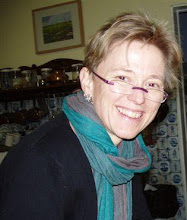
My family on a recent weeknight is daughter Clara, her friend Emily and Joseph. We come to the table at 8 o’clock for pasta with butternut squash and talk about the merits of feta cheese versus goat cheese, and the “cheap cheese” we had in a German restaurant that, without the accent, turned out to be “sheep cheese.” We discuss whether we like olives in our pasta. I could tell about the olive oil we had at Nikita’s, pressed from her housemate’s family trees in Italy, but since we are a sort of family ourselves, they’ve already heard that story.
We talk about the U.S. soccer team winning the semi-finals against France, and whether we’ll get to see the finals this weekend. We brainstorm how to handle a challenging kid in the sports camp where Emily is working this summer. We puzzle out how to arrange the furniture in Clara’s craft space upstairs.
Another night the table might include a combination of other friends and family: Tyler and Aaron and Clara, or Martin, or Tom, Amber, Tommy, Giovanna, maybe Adriana or Lauren. It could be just me and Clara and Joseph. Or me and Joseph. Or me and my own two kids. We might talk about the latest tragic headline, like the massacre in Norway, and debate whether there’s any obligation to read about such things when they are so depressing. Or we’ll talk about the quality of the acting in the Harry Potter movies (adults good, kids not so much), or the proposed teen curfew in Montgomery County or single vs. double rooms in college dorms. Recently, my nephew and his wife joined me at the table, and we talked about their move to Charlottesville and law school, and whether Mormons can eat chocolate (yes), and how to make something called a stuffed burger.
I love this fluid table, always open, throw some more pasta in the pot. Or not.
I miss it when the kids are gone.
Friday, August 5, 2011

Friday, July 29, 2011
Carpe Diem

An old friend of a friend died recently—someone I’d never met. But in marking his life, with a memorial of photos and shared memories among his family and friends, I got to know him enough to be inspired.
What a life.
Here is a guy who sailed across the Atlantic in an historic schooner, with Greenpeace. It took something like 27 days. He lived on the legendary Farm in Tennessee (yes, that Farm, the intentional community founded by Stephen and Ina May Gaskin), hiked the snow-capped mountains of Chile, and spent his last years growing acres of lush fruit trees and organic vegetables in that country. He was a craftsman and an adventurer, someone who lived life to the fullest.
I told my son, Tyler, about him, told him how I was inspired to reach beyond the comfort of another predictable day to consider the opportunities for adventure and risk that might come my way – to think outside the box. Tyler hardly needs to hear this tale—at age 20, he has lived it already, having spent two months on an organic farm in Costa Rica, ridden his bike across country and backpacked through Europe. He’s just returned from 10 days on the Appalachian Trail with 15 14-year-olds.
Similarly, his sister, Clara, just 18, has plunged into the mountains of El Salvador to build latrines in a sweltering jungle for an ecotourism site. At age 16, she flew by herself to New Orleans and joined a work crew painting apartments for hurricane victims and repairing anti-erosion fences for sand dunes. This month she moved to rural western Virginia, where she knows no one her own age, to nanny for month.
But embracing life happens on a smaller scale as well.
Like one recent weekday morning, when I roll my bike out of the shed, ready to ride the five minutes to the Metro station, then board the air-conditioned train into the city for work. With all the other worker drones. It seems too predictable. So instead of doing the expected, I go back into the house, change into bike shorts, and ride the 40 minutes all the way in to the office. A small choice – but it feels as though I’m getting away with something, taking a mini-vacation on my way to work.
On my ride, I pass the Dance Place, a center for classes and performances founded by another risk-taking innovator. An adventure when visionary founder Carla Perlo first purchased the building on a then-dicey street in Brookland in the early 1980s, it’s recently expanded to include a newly erected complex of studio, gallery, performance and rehearsal space with affordable apartments for artists and their families. Brilliant.
My ride also takes me past an older woman bent over a bright orange, five-gallon bucket in her front yard, watering the tomatoes she’s planted in it. No garden space? Innovate. I pass an old man slowly crossing a busy city street with his cane, trusting that cars will stop for him—a small but important act of faith. Like the one I’d witnessed before I’d left my house that morning: one of my friendliest neighbors, recovering from too many physical challenges for me to track, has taken his own cane and ventured all the way around our block. At my house, he stops long enough for a good chat and a bit of a rest before finishing his trek.
All of it is inspiring. Carpe Diem. Whatever the Diem may be.
Tuesday, July 12, 2011
Happy Fourth of July, Happy Summer

Hot.
Humid.
And beautiful.
Our Fourth of July parade is like a community portrait: you get the marchers, from Shriners—serious-faced, older African American men, with their funny, tassled hats—to Peruvian dancers, exuberantly dressed like lions, or in bright skirts and pants. There are bands, including the mostly-brass Takoma Park Community Band tootling along in the back of a truck; the perennial D.C. Motors rock and roll trio (“unplugged,” but playing with amps); and the Takoma Park Folk Festival contribution of a group of 20-plus people singing along with a guitar—again, in the back of a truck. The crowd sings along with them.
We get to wave to our neighbors, who march with the Unitarian Church, the boy scouts (in their hand-made roller derby cars), the community preschool and the attachment parenting group (they pass out fliers to explain exactly what that means). The Elementary School rolls along with a flat wagon dressed up as a swimming pool, to celebrate the pool they have there – the one that was almost abandoned, but then saved by they community. Their principal marches along with them.
The natural foods co-op wheels shopping carts with live-green messages on them, and gives away re-usable grocery bags. The manager of the new Ace hardware store drives by to hearty applause; the Panquility calypso band gets everyone dancing along the sidewalks; the folks who believe 9/11 was a conspiracy hold banners with quotes about truth from our founding fathers, and the parade watchers sober up. There’s the VFW from Hell’s Bottom, a once-backwater neighborhood near my house. We watch antique cars parade by, and a big, old firetruck. The Greenbelt Dog Training Marching Drill Team walk by singing about how they love their doggies, who obediently march along with them. A group of young girls in cheerleading skirts and tank tops, part of the Finest! Parade Marching Wildcats, shimmy and step to a clean drum beat from the boys who march along with them. The Washington Revels, dressed in long dresses and flower garlands, harmonize like good medieval musicians as they march.
Just as much fun as watching this crazy sampling of Takoma Park and its quirkiest neighbors is walking the parade route to see who’s out watching. I greet neighbors I run into every day, and others who rarely turn up, except for at this event: an old friend from my dog park days, another whose son attended elementary school with my daughter, a photographer I used to work with. Friends of the kids’. One of the community center’s artists, the director of public works, the former mayor, the guy who always cleaned up the cones at the soccer games.
And after the parade is finished—“That’s all folks,” proclaims the last car, staffed by two people from the Independence Day Committee that sponsors the event—neighbors disappear into various back yards and houses for follow-up picnics and parties, annual events that have become favorite markers in the Takoma Park calendar.
Yes, summer has arrived and settled in, with all my favorite characters along for the ride.
Photo by Julie Wiatt of the Takoma Voice
That's Clara on the left! With Lauren and her sister.
Saturday, July 2, 2011
All That Jazz
 “Un. Deux,” he says into the mic.
Then, “Superb!” In French.
It is sound check time at the Jazz Fest in Ascona. When the mics are right, it’s “Grazie mille,” many thanks: French and Italian from an English band playing American music in Switzerland.
This two-week music festival features an international mish mash of gospel tributes, big band, blues and New Orleans Dixieland jazz, set along the Lake Maggiore waterfront of Ascona, a village-like town in the part of southern Switzerland so influenced by Italy that the official language is Italian.
We walk through winding, narrow, cobblestoned streets to arrive at the waterfront, and follow our ears to various stages of international musicians. I wonder, as we listen to The Big Band Connection playing Glenn-Miller style numbers like Begin the Beguine and Satin Doll, whether Swiss horn players are less spontaneous in their improvisation, or more, or just different. The players line up for their turn to solo, which strikes me as a little more organized than what I’ve seen in the States – or maybe that’s just big band vs. smaller ensembles?
The band is set up in the main tent, complete with café tables and a bar, plus Lindy Hop dancers. Swiss ones. Good ones.
We find that, at many of the stages, the European audiences are reserved, compared to Americans. Not much hootin’ and hollerin’ after a hot bass solo, for example (except from me, the loud American I guess). Not much dancing, either, except for here in this tent, where a floor is set aside just for this purpose. At the blues stage, no one gets up at all, but the music is so irresistible we start our own dance floor (and later, the Lindy hoppers come and take over).
One of my favorite scenes this night is a side street filled with audience, all standing, looking up a slight incline to the stage where Mrs. Betty Lastie Williams pays tribute to gospel singer, Mahalia Jackson. These deep, heart-based songs –prayer, with an earthy, driving beat—have even this reserved crowd of (almost entirely white) Europeans swaying. Not all of them. But enough so you can tell they are moved.
Magic.
Photo of Big Jay McNeely by fotopedrazzini.ch
Beachy

I grew up at the beach in Florida, and visit it each year in Maryland or Virginia. There we roll out our towels on the sand and lie in the hot sun; we read books, surf, play Frisbee. When I was a kid, there was one place where we could buy food: the Sea Burger, which served bad hamburgers, fries, soda and ice cream.
What we did not do at the beach was drink coffee. Or steins of beer. Or have espresso and pastries in the afternoon. Or meet friends for a game of cards at a café table near the water.
These are the things people do at German and Swiss beaches.
The two lakeside beaches I visited during my trip to Europe each had a perfect mix of sun and shade. Sticky sand in the bindings of our books wasn’t an issue, as we could choose to spread out our towels on grass. At Lake Maggiore, where we went to the Lido Locarno, the sand that was along the shore was fine, like ocean beach sand, and the water was clear. Sailboats and small power boats drifted out past a raft you could swim to, but the water was so cold I only stayed in for long enough to dunk my head and gasp, then get back out into the sun.
There was a playground for children, and an older couple playing cards at one of the tables set up under a bit of shelter where, in the U.S., a boardwalk might have been. We set up another table and took advantage of the free wi-fi to book a hotel in the next town on our itinerary.
Nearby, another table of two old women enjoyed cappuccino and pastry. A big-bellied, shirtless man on the other side held his beer glass up to the sunlight, considering what—its amber color? Anticipating its refreshing bite?—before taking another gulp. The locals greeted one another as they arrived as if these were the weekly routine.
There were young children everywhere, from babies to teens, but none of the sun-scorched, overtired screeching I associate with an American day at the beach. In fact, I didn’t even smell sunscreen. And although there was ice cream, there was no sugary-sweet smell of waffle cones or the scent of fried foods in the air.
Here at the lakeside beach in Kaiserslautern, a similarly bucolic scene surrounds us. We are camped out in the shade of dozens of tall birches in an enormous grassy field. There is plenty of shade—or sun—for everyone. Two pairs of people play badminton (no net). Earlier we tossed an aerobie (those middle-less Frisbees) beside some Americans playing catch with a baseball. On the water, a rowboat glides quietly; a few children splash in the shallows, and some swimmers congregate on the dock. The water is cold—68 degrees F, 20 degrees Celsius—but much warmer than Maggiore, so I swim briefly before getting out. It’s also browner, with an odd, slimy feel to it. And the “sand” looks more like dirt, plowed up in a neat rectangle beside the lake as if it’s ready to plant. We stay on the grass.
About 20 yards from the water is a group of tables at an outdoor, self-serve restaurant – as in, order fries or spaghetti or bratwurst and pick up when ready. Again, there’s a couple playing cards. Some friends drinking steins of beer. People eating French fries, with mayonnaise. There are showers and bathrooms and cabanas is you want to store beach chairs and rafts and inflatable canoes.
We have these sorts of things at some of our U.S. beaches, I suppose. Perhaps one of the differences, the open space for example, is due to these being lakes, and not ocean beaches. The sun is less scorching, the surf less frantic. There is some sort of calm over the scene that is generally missing at so many crowded American beaches in summer.
Also, nearly all the women wear bikinis, regardless of their age, and the men are in various lengths of shorts, from stretchy, just-below-the-buttocks style (just short of speedo-style) to knee-length and baggy. In the farther reaches of the closely-clipped, grassy field are a couple of nude sunbathers. No one seems particularly body conscious, neither preening about what babes and studs they are, or embarrassed that they don’t meet the expectation of a magazine-perfect body.
People are relaxed. We happily follow suit.
Sunday, June 26, 2011
Adventures du la toilette
 Remember the book, “Everyone Poops,” from potty training days? Well, here is the European version: Everyone Pees. In all kinds of places. My favorite new-and-different European bathroom element is the happily ubiquitous dual flush toilet, commonly found in restaurants and hotels (including ours). There is one button to press if you want to flush after #1, and another button to flush after #2, which flushes more water, for that heavier load. When is the U.S. going to catch up with Europeans and make these simple water-saving devices a part of the common lexicon?
I also liked the highway bathroom stop we made in Switzerland. This ESSO gas station was situated in the bottom of a bowl of mountains somewhere south of Altdorf, with views worthy of a highway overlook. In the bathrooms, there was a gizmo to clean the toilet seat before you used it, plenty of toilet paper, soap and those hand driers that involve inserting your hands in a sort of envelope, where hot air blows on them and you slowly extract them to see that, voila! They are dry!
We did have to pay one euro for the privilege of using this uber-clean toilette, but the view outside was free: plus, just off the parking lot was a small pathway to a fast-running river, with a straight-up wall of mountain across the water. Photo-worthy.
Less appealing was the beside-the-highway stop, I think we were still in Germany at that point. This was a scenic overlook-type pull-over, but without the scene, just a bit of woods and a big group of white-haired tourists in the parking lot holding small wine bottles and posing for a photo. There was no bathroom—just a path in the woods with telltale squares of toilet paper here and there along the edges. So much for the legendary German sense of propriety and perfection. I picked my way down the path, hoping that German poison ivy would look the same as American poison ivy, so I’d recognize it before choosing the wrong spot for my toilette, so to speak. And I took care to bury my own toilet paper under a bit of moss.
More interesting – though I’m not sure it was much better – were the toilets in Bellinzona. Typical of Italian toilets (according to my more well-traveled bathroom buddy, Nikita), these involved two foot pads with treadmarks (what, in case you start to slide into the toilet below?) on either side of a hole in the ground. Well, it’s a porcelained hole in the ground, but still, it is on the floor, and you are straddling it and squatting. Okay. So I gamely hang my bag on the hook on the back of the door and squat. But somehow, in the middle of this process, my eyeglasses fall from where I’d hooked them on my shirt, and fall right into the hole.
I now know that hand sanitizer is actually a very good thing to carry along. And that it works on eyeglasses, just fine.
Perhaps the best way to avoid a dirty bathroom is the sign we saw in a Locarno, Switzerland cafe, on the men's room only -- shown at the top of this post. How not to pee.
Saturday, June 25, 2011
Bella Bellinzona

We pulled into town around 19:00, aka 7 p.m. (Europe seems to prefer what I think of as Navy time) looking for Tsui Fok Chinese restaurant. We’d read they have rooms to rent and this was confirmed by a friend who grew up in the area. But never having spoken to anyone who’d stayed there (and not knowing the friend’s taste in accommodations) we were unsure what to expect. The price was low, for Bellinzona (and for Switzerland), but more than the youth hostel (which was full). Would it be a find? Or would we find dark, narrow hallways permeated with the smell of fried egg rolls?
From the road, the building looked clean-lined, an ochre-colored stucco two-story with plenty of windows and balconies overlooking the quiet street just a block or so from the old town center. We walked into an airy foyer with a statue of a Happy Buddha grinning merrily at the entrance, and a brisk but smiling, round-faced, middle-aged Chinese woman showed us down the (well lit) hallway to our room.
Big sigh of relief.
Four beds, a sink and a wardrobe, whiter than white sheets and colorful comforters. Then, a big wow when we stepped onto the balcony: breathtaking views of the mountains and castles that embrace this little Swiss village.
This was a happy introduction to a short but very full stay in Bellinzona. That night we found the Corona, a restaurant recommended by our friends (thank you, Franca!). Aptly named—“Corona” means “crown,” and the town boasts three castles replete with kingly history—this spot also gave us a proper introduction to the distinctly Italian flavor of Ticino, this southern region of Switzerland.
Everyone here speaks Italian, including a staff of those young, good-looking waiters not only brimming with a mix of bravado and joie de vivre, but also with an infectious and inclusive spirit that makes you feel as though they’re about to let you in on all their inside jokes.
Our tables on the breezeway outside the restaurant was situated so that, just over Joseph’s shoulder, we could see the pizza man rolling, then throwing disks of dough and sliding them into the wood-burning oven built into the wall. Our pizza had eggplant and white asparagus, an unlikely combination that worked beautifully. There was also a carafe of the local merlot and insalata mista, something we’ve found at several places since but never quit as good: a selection of mixed lettuces, grated carrots, beets, corn and tomatoes. It all came together for that perfect European café experience you hope for: historic plaza, friendly restaurant, great food.
After dinner we wandered around town and walked along the lighted ramparts of the Castelgrande, carefully avoiding young couples smooching in dark corners and clusters of teenagers hanging out on the steps and in grassy courtyards. This castle and the associated city walls are so much a part of the town it seems their stones are as likely to pop up beside clothing stores and gelato shops as beside the castle gates, they are so integrated into the daily landscape.
The next day we took history for a walk through modern Bellinzona, renting audio tour phones from the tourist office and walking through the very much living streets of the villages founded around 900, steeped in centuries of long-aspt tradition, and still loyal to much of it. For example: the medieval market described by the tour echoes the present-day Saturday market in the square. And the fountain where we refilled our water bottles was the gathering place for villagers filling their vessels with the same mountain water back in Bellinzona’s earliest days.
Our audio tour took us up the white tower of the castle for sweeping views further up the mountain, where two similar castles guard the town. Then it was time to move on down the mountain to our next adventure: Locarno and Lake Maggiore.
Subscribe to:
Posts (Atom)